Speed Limits in Norway
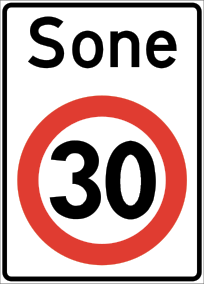
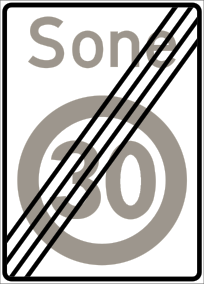
If you’re used to driving in the UK or the US, the first thing you’ll notice on Norwegian roads is how slow everything feels. Norway takes speed limits seriously — not just in the law, but in enforcement. Automatic speed cameras, section control systems, and steep fines are the norm, not the exception.
The default limits
Norwegian traffic law sets two default speed limits that apply whenever no sign states otherwise:
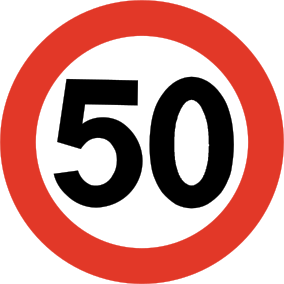
- 50 km/h in built-up areas (tettbygd strøk)
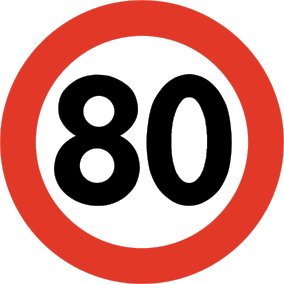
- 80 km/h outside built-up areas
These defaults come from Vegtrafikkloven § 6. In residential areas, you may see no speed signs at all — but the limit is still 50.
Posted speed limits
Beyond the defaults, Norway uses a range of posted limits:
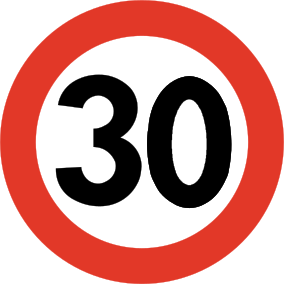
- 30 km/h — common near schools and in residential zones
- 40 km/h — some urban areas
- 50 km/h — standard urban limit
- 60 km/h — semi-urban and ring roads
- 70 km/h — transitional zones between urban and rural
- 80 km/h — standard rural roads
- 90 km/h — good two-lane highways
- 100 km/h — divided highways and some motorways
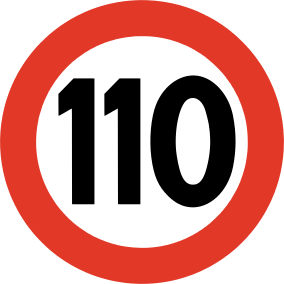
- 110 km/h — best-quality motorways only (introduced in 2014)
The 110 km/h limit is rare and only applies to the highest-standard motorways, mainly around major cities in southern Norway.
Heavy vehicles and trailers
If you’re driving a vehicle over 3,500 kg or towing a trailer, your maximum speed is 80 km/h regardless of the posted limit. Even on a 110 km/h motorway, a car with a caravan must stay at 80. This rule applies to rental motorhomes as well.
How limits are enforced
Norway uses several enforcement methods that work together to make speeding genuinely risky:
- Fixed speed cameras (faste fotobokser) — marked with warning signs
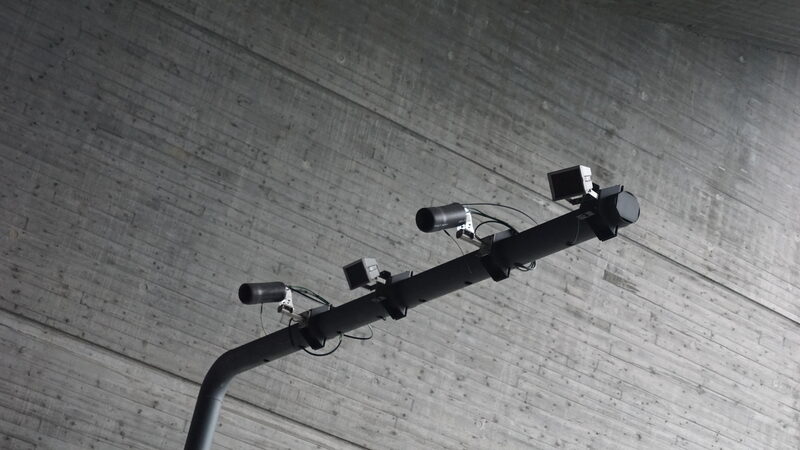
- Section control (streknings-ATK) — measures your average speed over a stretch of road, typically 2–10 km. You cannot just brake for the camera; your average speed over the entire section is what counts.
- Mobile police patrols — unmarked vehicles with laser equipment
- Roadside inspections — Statens vegvesen conducts spot checks
Section control is particularly effective and increasingly common on major routes and in tunnels. Because it measures average speed, there’s no way to “game” it.
What happens if you speed
The fines are steep by international standards. Going just 6 km/h over in a 50 zone costs NOK 3,350. At higher speeds, you face licence seizure, penalty points, and criminal prosecution. See the full fines and enforcement page for detailed fine tables.
Since 2025, Norway participates in the EU’s Cross-Border Enforcement (CBE) framework — fines can follow you home, even if you’re driving a rental car with foreign plates.
Practical tips
- Watch for zone changes. The limit can drop from 80 to 50 as you enter a village with no buffer zone.
- Winter conditions. Even if the posted limit is 80, you’re expected to slow down in poor weather. Driving too fast for conditions is a separate offence.
- Mountain roads. Limits of 60–70 km/h are common for good reason — steep drops, sharp bends, and single-lane tunnels.
- Cruise control helps. On long stretches it’s easy to creep above the limit without noticing.
- GPS apps like Google Maps and Waze show camera locations — legal to use in Norway.
How Norway compares
🇬🇧 United Kingdom vs. Norway
30 mph (48 km/h) urban, 60 mph (97 km/h) single carriageway, 70 mph (113 km/h) motorway
50 km/h urban, 80 km/h rural, max 110 km/h motorway
🇺🇸 United States vs. Norway
Varies by state: typically 25–35 mph urban, 55–75 mph highways, up to 85 mph (137 km/h) in Texas
50 km/h urban, 80 km/h rural, max 110 km/h motorway